Marcia Marcus 1928-2025

“Art is absolutely human. There is nothing mystic about it.”—Marcia Marcus
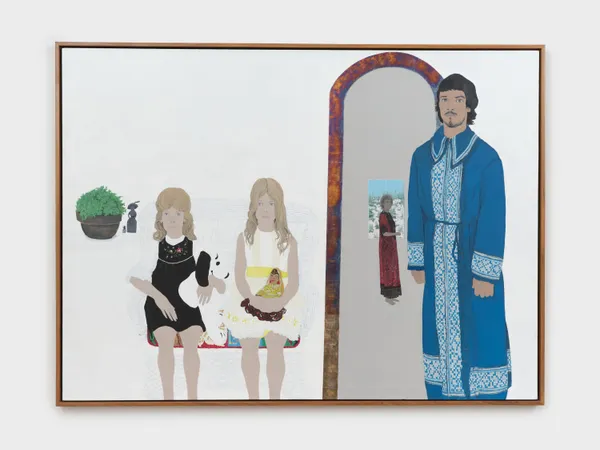
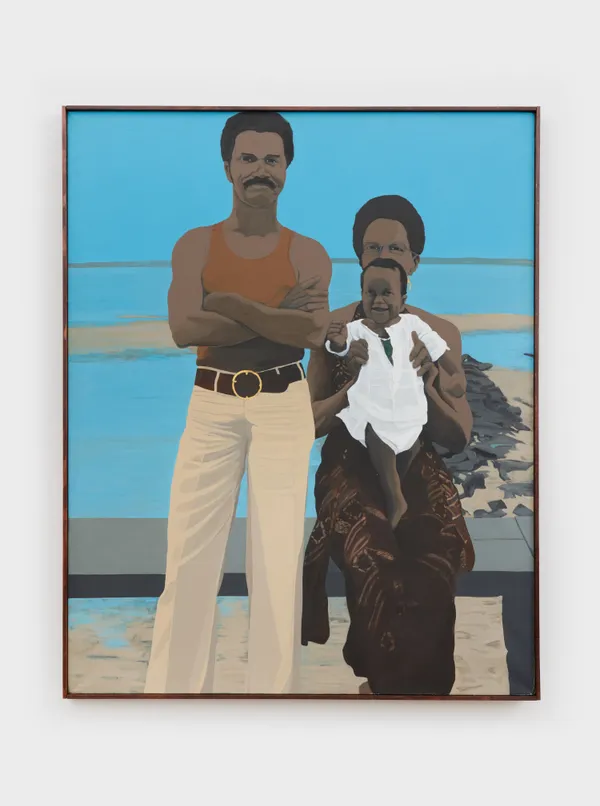
Marcia Marcus is recognized as a singular figure in postwar American art, celebrated for her unwavering commitment to representational painting at a moment when abstraction and other movements dominated critical discourse. Across more than six decades, Marcus forged a visual language that was both exacting and expressive, drawing on the traditions of Classical and Renaissance painting while remaining acutely responsive to the social and cultural conditions of contemporary life.

Born and raised in New York, Marcus pursued her bachelor's degree in fine arts at New York University (1947), and subsequently studied at The Cooper Union (1950-52) and the Art Students League (1954). At Cooper Union, Marcus worked alongside artists similarly invested in reimagining figuration for a contemporary context, including Alex Katz and Lois Dodd. In the early 1950s, Marcus began visiting Provincetown during the summer months, forming experiences that would have a lasting impact on her approach to painting from life and memory. It was here that she reestablished her acquaintance with Sally and Milton Avery, whose advocacy would result in Marcus’ inclusion in a pivotal group exhibition at the National Arts Club, New York, in 1959.
During this period, Marcus was embedded in the burgeoning downtown art scene and frequented the Cedar Tavern in Greenwich Village, an important social nexus where she interacted with other pioneering figures such as Lee Krasner, Elaine de Kooning, Marisol and Pat Passlof. At the Art Students League, Marcus honed her technical prowess and draftsmanship. Shortly after, she continued to cultivate a close-knit community of artist friends, some of whom would animate her canvases as seen in her portraits of Willem de Kooning, Bob Thompson, Emily Mason and Red Grooms. It was by invitation from Grooms that Marcus became part of the artist cooperative the Delancey Street Museum, along with founding members Jay Milder and Bob Thompson. There, Marcus participated in the inaugural exhibition in 1959 and, the following year, staged both a solo exhibition of her self-portraits and a Happening. Having previously met and collaborated with Allan Kaprow in Provincetown, Marcus was among the first artists to merge performance and painting. Throughout the 1950s and ‘60s, Marcus also exhibited her work at the legendary Stable Gallery and March Gallery, and was known as a central figure in New York’s avant-garde art world.
After participating in the group show, Young America 1960: Thirty American Painters Under Thirty-Six, at the Whitney Museum of American Art, Marcus embarked on several influential trips in Europe. Following visits to various historical cities in Italy, Antibes and London, as well as Paris on a Fulbright Fellowship, Marcus traveled to Greece for a month. These formative experiences deepened Marcus’ interest in Classical history and motifs from the region–notably the temple ruins and the figure of Athena–that would continue to recur in her later oeuvre. In the 1970s, while back in the United States, Marcus took on several teaching positions, providing necessary financial support to continue her artistic practice.
In the 1980s, Marcus’ travels across the United States, including New Mexico, as well as further afield to India, provided a wide range of new imagery for her paintings. In 1982, Marcus also traveled back to Paris, where she would visit Joan Mitchell. Marcus’ significant achievements in painting were celebrated during her lifetime: the exhibition Marcia Marcus: Twenty Five Year Retrospective was staged at the Canton Art Institute, Ohio, in 1984, and in 1991 she was awarded a National Endowment for the Arts Grant, Painting.
Long regarded as an artist’s artist, Marcus’ work has recently gained increasing critical and institutional recognition for its emotional intensity and intellectual depth. Positioning the human figure as a site of psychological and ethical inquiry, her portraits of the artists, writers and cultural figures within her New York milieu, as well as her incisive self-portraiture, affirm representation as a vital and rigorous mode of artistic expression.
MUSEUM EXHIBITIONS & COLLECTIONS
Marcus’s work has been widely exhibited in museums and galleries throughout the United States. During her life, Marcus was the recipient of major institutional awards including: the Pollock-Krasner Foundation Grant (1993); National Endowment for the Arts, Painting (1991-92); Adolph and Esther Gottlieb Foundation Grant (1983); RISD Museum Grant (1966); Ford Foundation Artist in Residence Grant (1966); Rosenthal Award (1964); and Fulbright Grant to France (1962-63), among others. Her paintings are held in numerous public collections, including: the Hirshhorn Museum and Sculpture Garden, Washington, D.C.; Philadelphia Art Museum, PA; Buffalo AKG Art Museum, NY; Guild Hall, East Hampton, NY; Newark Museum of Art, NJ; Rose Art Museum, Waltman, MA; Phoenix Art Museum, AZ; Canton Museum of Art, OH; Cincinnati Art Museum, OH; Utah Museum of Fine Art, Salt Lake City, UT; Minneapolis Institute of Art, MN; Smithsonian American Art Museum, Washington, D.C.; as well as the Whitney Museum of American Art, New York, NY, among many others.
In 2026, Provincetown Art Association and Museum will present the artist’s career-spanning retrospective from June 26–August 30, 2026, accompanied by a major monograph.

-
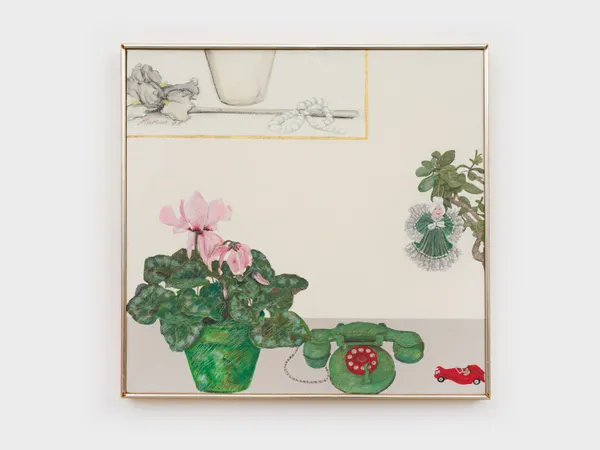
 Still Life with Telephone
 -
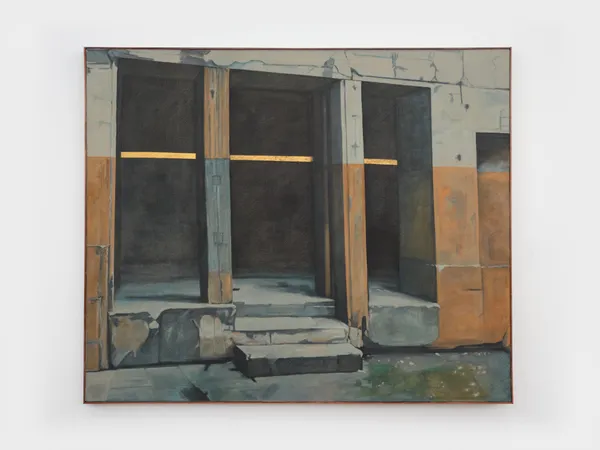
Ruine
-
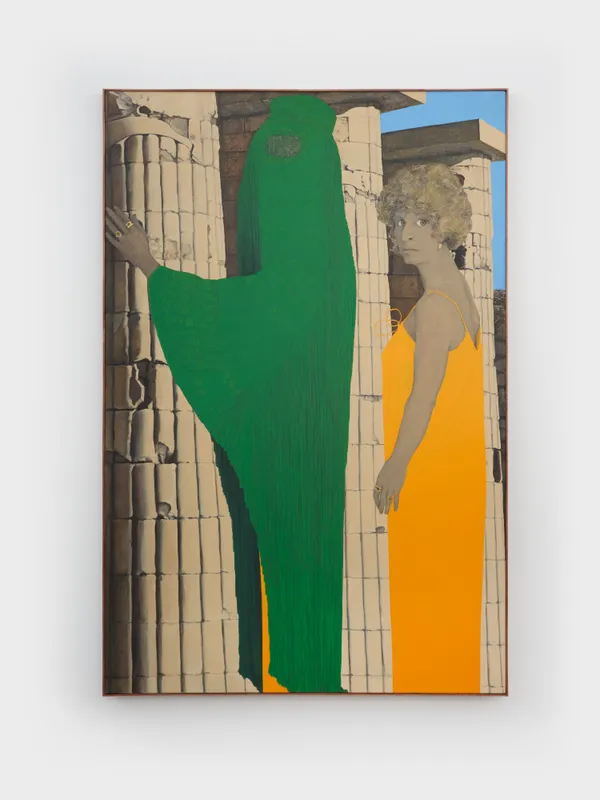
Double Self-Portrait, Saqqara a.k.a. Double Self-Portrait
-
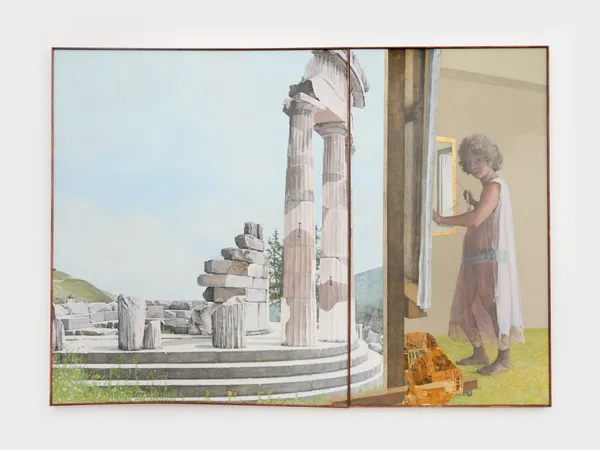
Mirror Image (Self-Portrait)
-
Family a.k.a. Family Portrait
-
Tyna, Alvin, Baby